

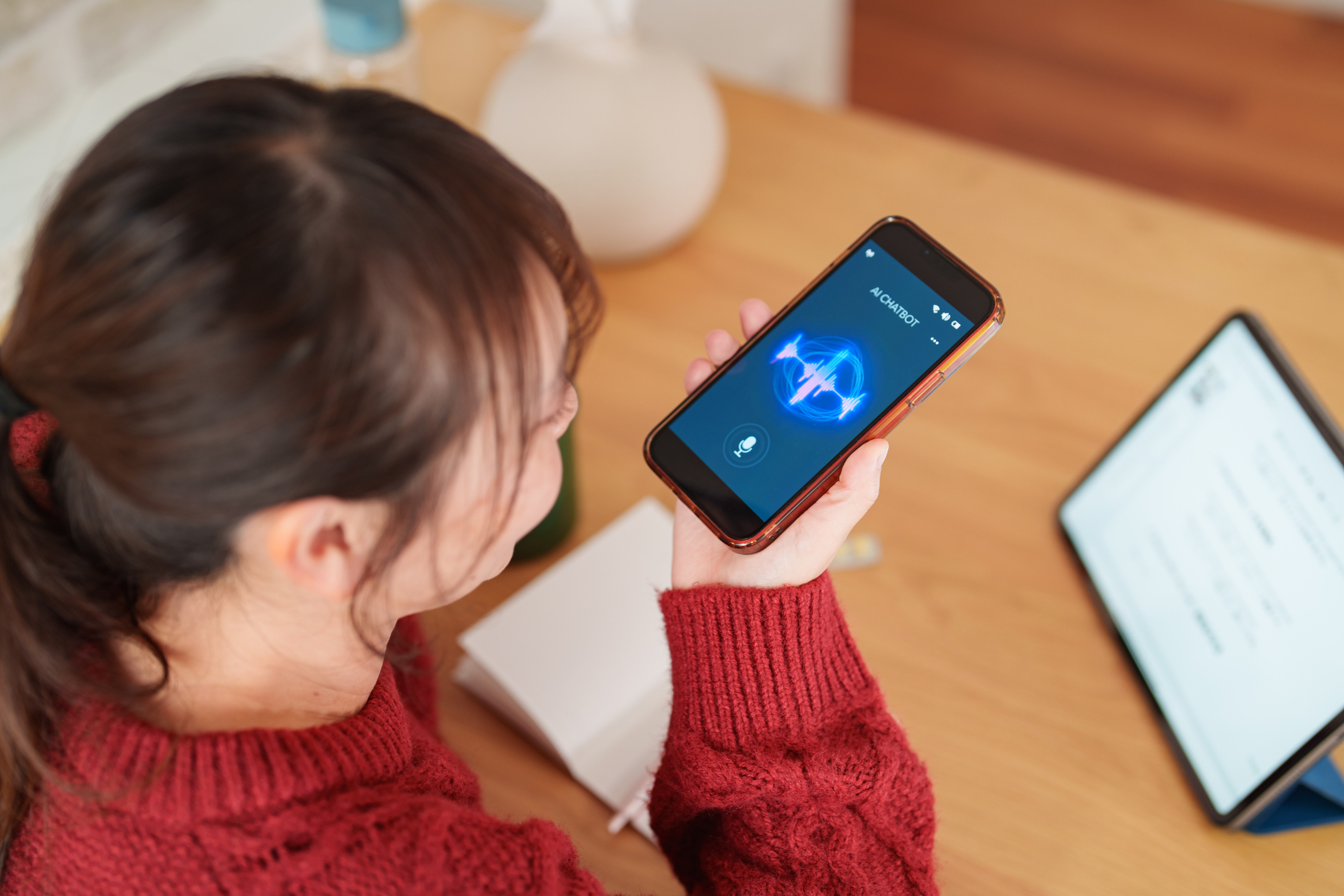
In a recent MedCity News article, Marvin’s Dr. Heidi Schrumpf makes a sharp and timely point: residents and fellows are entering medicine under extraordinary pressure, and many are already turning to AI for help, not just for clinical tasks, but for emotional support too.
That should get the attention of every health system leader, DIO, GME executive, and program director.
Not because AI is inherently the problem. In many ways, it’s a signal that residents are showing us, quite plainly, what they need: support that is immediate, accessible, relevant to their lives, and available when distress actually shows up, which is often late at night, after call, between rotations, or in the thin exhausted margins of a demanding week.
What Heidi’s article gets exactly right
Dr. Schrumpf argues that residents are uniquely vulnerable to burnout because they face many of the same stressors as senior physicians, but with less control over their time, less flexibility, and fewer real options for stepping away without consequences. On top of that sit the pressures of relocation, debt, new family responsibilities, identity formation, and a medical culture that still too often treats self-neglect like professionalism.
Even when support technically exists, it often misses the moment.
Residents may be handed a provider list or told to use an internal resource. They may be offered support that only exists during business hours, with long waits, poor fit, or unclear privacy boundaries. That is not meaningful access, and residents can tell.
A Pew analysis found that 70% of physicians with moderate to severe depression said getting an appointment that fits long, nontraditional work hours was a major concern. The same analysis found that 61% of physicians said their insurance only covered mental health clinicians within the same health system where they work, raising privacy concerns that make them less likely to seek care.
In other words, the barrier is not just stigma anymore. It is fit, timing, confidentiality, and trust.
Why residents are turning to AI
Residents are already using AI in their day-to-day work to synthesize information, organize thoughts, speed up administrative tasks, and pressure-test decisions. So it’s not surprising that some are also using it in moments of overwhelm, uncertainty, or emotional strain.
That doesn’t mean AI should become the default mental health solution for physicians in training.
As Heidi notes, AI tools without clinical oversight can miss urgency, flatten nuance, and fail to account for the specific pressures of residency: fear of making a mistake, fear of evaluation, chronic sleep deprivation, moral distress, and the constant pressure to perform. In the worst cases, an experience that feels supportive may delay real care.
At the same time, dismissing AI entirely would miss the point.
A Cedars-Sinai study published in April 2025 found that AI was better at identifying certain critical red flags, while physicians were better at drawing out a fuller history and adapting recommendations in context. That is a useful model for healthcare leaders: not AI instead of human care, but AI with guardrails, clinical oversight, and clear escalation pathways into real support.
This is not a wellness issue. It is an infrastructure issue.
Resident mental health is still too often treated as a side initiative, a wellness week, a poster campaign, a page on an intranet no one trusts. But distress among trainees does not stay politely contained. It spills outward into attention, judgment, teamwork, empathy, retention, and patient safety.
Health systems do not need more symbolic gestures. They need infrastructure residents will actually use.
That means support that is:
- Confidential and separate from evaluation concerns
- Available outside traditional business hours
- Specialized for the realities of clinical training
- Easy to access, not buried in bureaucracy
- Designed for trust, not just compliance
- Able to escalate quickly to human clinical care when needed
This is also why the timing matters. Health systems are under growing pressure to show that support is real, functional, and credible, not merely listed in a handbook. Heidi’s argument points to something deeper than burnout rhetoric and asks whether institutions are willing to build for the way residents actually live now.
The takeaway for health system leaders
Residents aren’t waiting for healthcare to modernize at its leisure, they’re already reaching for tools that feel immediate, private, and available. If the formal system remains hard to access, impersonal, or poorly aligned with the realities of training, they will continue to look elsewhere. That is the real warning in this moment.
The organizations that lead here will be the ones that stop treating resident support as a peripheral benefit and start treating it as core clinical infrastructure. Because it is. And because the quality of care residents receive shapes the quality of care they give.


